
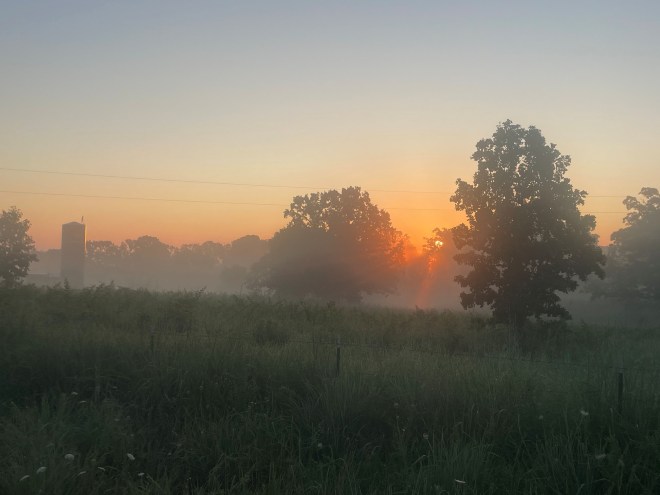
Seven years ago I wrote “REAL Green Start”
What I said there is as true now as then. 204 posts later and I am giving you conclusions which in reality is present in REAL Green Start. This is then about the journey not the destination.
Do not undertake REAL Green unless the lifestyle appeals to you. REAL Green is not possible for the majority because most live an urban life. Many struggle to maintain the life they have. Of course, parts of REAL Green are available to all especially the spirituality. REAL Green is not the only way of life. It is meant for a few who inhabit micro climes of permaculture localism.
I would compare my conclusions to getting older. Once in your sixties you begin to slow down with age both physically and mentally. A kind of acceptance sets in for the inevitable end that occurs as one ages. This end is not just death but also the end of capabilities as you age. REAL Green embraces the end of techno man in the same way.
If at this point you are still interested, it could mean REAL Green interests you on an academic level. This means you seek to understand this alternative view of things because of intellectual curiosity or an innate desire to seek the truth.
I recommend this read for a primer on the age of decline. I distilled down 25 pages to 5 for the points of interest to me. Most telling is at the very end his conclusions which are REAL Green conclusions.
PARKING THE THESIS, Posted on July 1, 2026
This in a nutshell covers the macro decline of human civilization in the realm of the physical or what I call man’s human pole of science. This decline is subtle. Many of you will not notice it except around the margins where affordability impacts you.
The significant changes from this tipping over may not even affect you before you die. I am in my early 60’s and it is likely I will not see the worst albeit at anytime this overextended world may self-destruct. I fear my kids will see the worst. This is how quickly decline will accelerate.
This article covers well the inevitability of decline that a growth-based system on a finite planet must eventually experience. We are bamboozled with tech advancements especially these days with AI. I would make a point that what tech has done is made us weaker. We are prisoners of our comforts. We have become lazy from affluence. If life does get hard many of us will not have what it takes to negotiate a hard dose of reality.
One of my most important conclusions is adapt now to this decline. Beat the rush and embrace a tougher life now. I show in REAL Green that the lifestyle is gratifying if you understand the reasoning behind increased discomfort and workload. This is a keystone of REAL Green. Decline in place and find dignity in lower affluence. Embrace relative poverty to realize a spiritual windfall. This is simple and boring and why it is so hard.
REAL Green is about a permaculture homestead in localism around or near a small town. It is about community not the lone wolf prepper. REAL Green is green prepping. What is green is more prepped. Here green means closer to nature not EV’s and solar panels. Prep for decline and be green for spiritual enhancement.
REAL Green is relative and realistic because this world is not conducive to this way of life. The status quo is drenched in carbon energy and techno path dependencies. REAL Green if properly pursued, is not profitable in the way the world works. There are many opportunity costs where your time and money could be better spent in regard to affluence.
This alternative life is beset with inconsistencies because you must use the status quo to leave it. There will be incongruous juxtapositions all around. The surreal will dominate with paradoxes. This is because you are choosing a way of life that goes against the status quo of growth and manifest destiny.
We are not going to the stars and AI will not usure in a 4th industrial revolution except for but a moment in history. These last efforts at immortality will hasten decline. They will darken spirituality but will provide the seed bed for a spiritual awakening. Man will exhaust his drive to control and meddle with the force of life. It is darkest just before dawn.
What you will find is a new road of truth that the status quo can’t see. This is a spiritual journey. This other pole of mankind has long been neglected. I am not so much talking religion as the metaphysical. I am talking of the sacred which can only be approached. REAL Green is not a religion it is meant to strengthen your unique individual higher power.
The spiritual is where the new force of growth is. A new enlightenment is dawning in human consciousness. Our headlong drive into a techno driven world has brought spiritual darkness. REAL Green recognizes the spiritual is a force of nature. It is hardwired into our DNA. We are a moral people, and this is how we got to where we are at. This force can’t be restrained.
Transhumanism is not compatible with this awakening so to the degree you can disconnect and triage tech from your life is where you will increase your openness to this new age. Relatively and realistically turn away from tech but understand you must dwell within this techno world.
If you have ever had a spiritual experience or felt metaphysical experiences, then you are feeling connection to this power. Science is of no use here and in fact hinders spirituality. This is not a judgement on science but on scientism. REAL Green seeks a balance to these two poles of the human duality. In this age of transhumanism, balance is found by a wisdom of less. Less tech and science is always preferable in this age of excess.
The conclusion then is 80 percent attitude. This will drive an effort to adapt and accept a world tipping over. The activity this attitude will drive will then support this conversion. The results will make this hard road more palatable. You will find strength to do hard things and when the day is done find spiritual satisfaction to live to die another day.
Surplus Energy Economics
Posted on July 1, 2026
PARKING THE THESIS
Today, through the application of a series of fundamental precepts, we can know, and at very high levels of confidence, that the economy has stopped expanding, and is heading into contraction.
What we also know is that this process of economic inflexion will be accompanied by crises, which might be financial, social, geopolitical or, in all probability, a combination of all three.
We cannot, of course, know exactly when this will happen, but there are plenty of reasons for supposing that the processes leading to this crisis are accelerating. We need to be clear that the ending and reversal of growth can only end in crisis.
The idea, for instance, that there is some kind of temporary and fixable “crisis” in the “cost of living” is ceasing to persuade, mainly because it isn’t true. Governments don’t have “answers” to this problem, because no such answers exist within current political parameters. Worsening hardship, insecurity and inequality are undermining the foundations of Western social and political stability.
International relations, meanwhile, have been degenerating into intensifying competition for scarce and dwindling resources. The financial system has been reaching dizzying new levels of absurdity, with investors now giving serious credence to ideas like mining asteroids, manufacturing on the Moon, travelling to Mars and building data centres in space.
First, though, we must be quite clear that nothing happens ‘quickly’ in the economics of energy, and that a successor to fossil fuels won’t be found in any sudden moment of ‘technology saves the day’
The lessons of this history are that energy evolution happens very gradually, and that each progression has required the foundational technologies of its predecessor. There are no ‘lightbulb moments’ and, if we were to find a successor to hydrocarbons – a successor that would ensure seamless economic transition – we would have needed to have found it no later, perhaps, than the 1970s, the 1980s or, at best, the 1990s for it to be ready today.
For various reasons, neither has taken over from fossil fuels, and time has run out. The very idea that some new discovery will instantly or even quickly transform our energy and economic future is ludicrous.
Beyond the comparatively gradual evolution of the economy, the key point to be taken from this sequence is the essential energy causation of economic trends. This, as we shall see, is where the parabolic trajectory of the Energy Cost of Energy
This precept of the materiality of services tell us that the idea that growth in the relative importance of services in proportion to goods can reduce the materiality of the economy is completely fallacious. So, for that matter, is any notion that we can somehow “de-couple” economic activity from the use of energy, a logical impossibility given that the economy IS an energy system.
Our second precept is that of continuity. Whilst some material products are consumed, others either wear out or reach the ends of their useful lives. What we are describing is a continuous process of creation, consumption, disposal and replacement.
Our next principle, therefore, is the primacy of energy. The physical economic system operates by using energy to convert other raw materials into products, artefacts and infrastructures. Nothing that has any utility whatsoever can be produced without the use of energy.
Since money is a claim on products and services, it is, by definition, a claim on the energy required to supply them. Likewise, debt, as a ‘claim on future money’, is in reality a claim on future energy.
In all instances of inflation, deflation or default, explanations are to be found in shifts and stresses in the relationship between the financial and the physical.
In reality, this concept of “free” energy is nonsense. Energy has no value at all until it is put to use, and this requires a supply infrastructure, extending from wells and refineries at one end of the spectrum to solar panels, wind turbines, power storage systems and grids at the other.
All of this infrastructure is material, and nothing material can be created, operated, maintained or replaced without the use of energy. What this means is that, whenever energy is accessed for our use, some of this energy is always consumed in the access process, and is not available for any other economic purpose.
This “consumed in access” component, stated as a percentage of total supply, is known in Surplus Energy Economics as the Energy Cost of Energy. Trend ECoEs have already risen sharply, from 2.0% of energy accessed in 1980 to more than 11% today, which goes a very long way towards explaining the troubled economic conditions of our times.
We must never forget, when considering the technological dimension, that the potential of technology is always bounded by the laws of physics, within an envelope of possibility set by the characteristics of materials and the laws of thermodynamics.
Once the benefits of reach and scale have been exhausted, a new driver takes over the direction of ECoEs. This driver is depletion, which describes a natural preference for using lowest-cost resources first, and leaving costlier alternatives for later.
Renewables fit within this sequential process, since they cannot be developed without recourse to legacy energy from fossil fuel sources. Despite claims to the contrary, renewables are not a discrete successor to hydrocarbons.
The problem with renewables is that, far from providing a qualitative advance on fossil fuel energy, they cannot be detached from it, and do not boast meaningful superiorities over it. Renewables can be used for comparatively light industrial activity, such as the assembly of components, but cannot undertake the ‘heavy lifting’ in the economy. What this means is that renewable energy is not “renewable” in the sense that it can be wholly detached from the use of fossil fuels. Renewables have a significant future role, and one that can be finessed to advantage, but are not a self-sufficient successor to carbon energy.
this conversion ratio has been trending gradually downwards, which informs us that the quality of the non-energy resource base has been depleting slightly more rapidly than the broad swathe of conversion technologies has been advancing. What this means, for example, is that ore grades have declined more quickly than mining methods have improved, and that agricultural land has degraded more rapidly than farming techniques have progressed.
Looking ahead, the working assumption made here is that a changing prioritization of energy use – in favour of necessities and away from discretionaries – is likely to flatten the forward curve of conversion ratios. But it’s equally possible that the effects of environmental degradation on the quality of the non-energy resource base might cause the downwards trajectory to steepen.
What we can see in Fig. 5B is the real explanation for the non-temporary, non-“crisis” in the “cost of living”. Average prosperity per capita, long stagnant at best, has now inflected downwards, whilst the real costs of essentials have been rising relentlessly.
Looking ahead, we can see how the unfolding downturn in prosperity combines with rises in the real costs of essentials to impose severe leveraged compression on the affordability of discretionaries (Fig. 5C).
Thus far, discretionary consumption has been propped up by runaway credit expansion, and this leads us into the next phase of our analysis, which is the impending failure of the credit backed simulacrum of ‘business as usual’.
The loss of growth thus has profound psychological and political implications far beyond the simply material. With growth ending, we will have to “own” the consequences of our misjudgements and excesses, relinquish notions of seamless generational improvement, and address once more the vexed questions of inequality and redistribution.
we were now trapped within the variable geometry of rising debt and stagnating output.
It’s very important that we remember, at this point, that assets only ever command paper values, and can never be monetised in the aggregate. The only possible buyers for the entirety of the stock market, or for the whole of a nation’s housing stock, are the same people to whom these already belong.
Classification of these fallacies has at least the merit of informing us about the ways in which denial will fail. Collective faith in technology will be undermined just as monetary excess pushes the financial system ever closer to collapse. Absolute faith in the potential of technology is already starting to wane, not least as the enshittification of the ‘ads and algorithms’ business model pushes Big Tech into massive investment in AI, as well as into making claims about the technological future which increasingly strain credulity.
Markets that place any faith at all in space tourism, lunar manufacturing, the mining of asteroids, data centres in space and travelling to Mars – and that buy in to AI promises that far exceed available resources – are markets that have already travelled a long way down the rabbit-hole of wishful thinking and implausibility.
The potential efficiencies of wind turbines and solar panels are governed, respectively, by Betz’ Law and the Shockley-Quiesser Limit, and best practice is now about as close to these maxima as we are likely to get. The issue of storage, connected to the problem of intermittency, is essentially a matter of portability, and the limits of possibility are set by what we might call the Energy Cost of Storage. The mathematics here are complex, but what emerges from them is that renewables are not a qualitative improvement on hydrocarbon energy, and cannot provide the kind of economic uplift that was experienced when oil took over from coal.
Financial collapse, of itself, will be a game-changer in a broader adaptation to the implications of negative growth. Vast amounts of paper wealth, and the influence that goes with them, will be destroyed, and the structural shift away from discretionary consumption will accelerate.
CONCLUSIONS
None of the foregoing need mean that a post-growth economy is unmanageable. A perfectly plausible post-growth model exists, one in which top-down, centralised institutions fail, and are replaced by localised, bottom-up alternatives, which operate at a more human scale, and are more in keeping with environmental sustainability. The astute will be starting to create these localised alternatives even before over-centralised systems collapse.
At the same time, and as the affordability of discretionary (non-essential) products and services retreats, an economy increasingly starved of surplus energy will become progressively more labour-intensive.


Thanks for this message Shoal. Although I am not able to do a permaculture homestead near a small town, I am able to live in a small town, which is a move I have already made. Will see how I can adapt further as time progresses.
I thought this summary of yours is excellent, as well as the approach you offer in the paragraphs that follows this one:
We are not going to the stars and AI will not usure in a 4th industrial revolution except for but a moment in history. These last efforts at immortality will hasten decline. They will darken spirituality but will provide the seed bed for a spiritual awakening. Man will exhaust his drive to control and meddle with the force of life. It is darkest just before dawn.
I agree with your final conclusions and it was interesting to read about some of the technical reasons why renewable energies have major limitations (due to Betz’ Law and the Shockley-Quiesser Limit – I hadn’t heard about these before).
However, as we can see, when people become committed to popular solutions they find it hard to admit to their limitations, downsides or negatives. It has always been this way – people need reasons to feel positive to block stress, worries and concerns and keep themselves ‘up’. Basically realism with regards to what we are (truly) facing is only for the courageous who have the capacity to deal with it and remain balanced and positive, regardless.
Thanks
J.J.
LikeLike
JJ, much appreciate the shout out. Your insight, support and friendship have given me personal intellectual validation over the years. This has helped my message of REAL Green. Very few people engage me on the intellectual side of my message. It is hard to find others who even entertain our alternative message of a cyclic change of macro degrowth with a resulting spiritual enlightenment.
In regard to the requirement of REAL Green being a permaculture homestead near a small town, living in a small town is just as important and needs a REAL Green style message. Actually in regard to impact per capita it is probably more important. What REAL Green stresses is that it is essential to leave large cities. Mega cities are a death trap in regard to survival and should be avoided at all costs.
I tried a small town when I lived for 6 years in Hermann Missouri. This was 23 years ago. It had around 3000 people and was a perfect setting for a survival town post decline. I made an effort at localism in Hermann but found I needed to be on a farm. Prior to Hermann I was on the farm where I had my spiritual experience that initiated REAL Green. This farm was just across the Missouri river from Hermann in a magical small valley that connected me to the spiritual.
A small town is where support for small farms has always been. I haven’t written enough about REAL Green and small towns, but I see it has essential to offering the services and community that REAL Green finds essential to survival of a permaculture homestead. Small towns are where the skilled craftsmen are and where small-scale manufacturing can be.
In regard to your message. In the REAL Green format EnergyShifts.net is prophetic so in this sense you are an oracle. You are doing spiritual permaculture that is guiding us into this new age that is dawning. REAL Green discusses hybridization of the new and old. It speaks of triage and salvage. This is just as true spiritually and intellectually. Modern man has acquire so much enlightened knowledge of philosophy, theology, and psychology that defines our humanity. You take it a step further by enmeshing modern thought with Myan insights.
One of your most impactful ideas for my REAL Green has been the explanation of Myan acceptance of degrowth. It essentially has been the only civilization to embrace the death of its civilization. Collapse was part of their culture. In this regard the Maya may have been the most enlightened to the force of life manifested in human development.
The Mayan story gives a rationality to what mankind now faces. If our culture could embrace this cyclical understanding of what is ahead then decline could be much more palatable. So in this sense your message is a macro lifeboat and hospice for our culture that we both see as coming to an end.
LikeLiked by 1 person